

Thursday, January 28, 2016

Tuesday, December 29, 2015

Friday, May 16, 2014
Scientific report: Ecological Observation on Maninjau Lake and Singkarak Lake, West Sumatra, Indonesia
From 13 to 18 March 2014, the research team from
School of Biological Science, Universiti Sains Malaysia (USM) were given a
golden opportunity to visit two lakes in Indonesia. Located in West Sumatra, Maninjau
Lake (caldera lake) and Singkarak Lake (tectonic lake) were both formed by volcanic
eruption. The team did observations and initiated the first sampling in these
two lakes as the initiative from the collaboration with Research Centre for
Limnology, Indonesian Institute of Sciences (LIPI). With the surface area of 10,
780 ha, Lake Singkarak is the largest lake in West Sumatra followed by Lake
Maninjau with surface area of 9, 950 ha. Lake Maninjau and Lake Singkarak are
the main water sources for local people as most of them engage with agriculture
and aquaculture activities. However, these lakes function mainly in generating
hydroelectric power to West Sumatra and Riau Province.

The representatives from both USM and LIPI after the
signing of MoU on 14th March 2014.
From Left: Dr. Luki Subehi, Prof. Mashhor Mansor,
Associate Prof. Dr. Wan Maznah Wan Omar, Dr.
Tri Widiyanto, Prof Dr. Iskandar Zulkarnain
The collaboration between USM and LIPI has begun
officially as the Memorandum of Understanding (MoU) and was signed by both
institutes between Associate Professor Dr. Ahmad Sofiman Othman (Dean of School
of Biological Sciences, USM) with Dr. Tri Widiyanto (Director Research Centre
for Limnology, LIPI) witnessed by Prof Dr. Iskandar Zulkarnain (Deputy Research
Centre for Limnology, LIPI). By having the MoU signed, all the researches and
scientific projects involving both countries would be easily conducted. From
the collaboration, the teams were aiming to extend the network and make it as a
global and international collaboration in terms of limnological studies
focusing on biological engineering approaches.
The survey in Maninjau Lake and Singarak Lake was
led by the limnology team from LIPI with different field of expertises: Dr.
Luki Subehi (Geo Hydro-Climatologist), Mr. Iwan Ridwansyah (Bathymetric and
GIS), Mr. Hendro Wibowo (Hydrology and SWAT Model Analyses), Mr. Fajar Setiawan
(Remote Sensing and Water Quality), Mrs Dini Daruati (Chlorophyll and Remote Sensing).
From our side, researchers involved are Associate Professor Dr. Wan Maznah (Biomonitoring and Biological Activities of Algae),
Professor Mashhor Mansor (Ecology), Dr. Azma Hanim (Zooplankton Taxonomist), Onrizal
(Mangrove Forest), Nor Aisyah Omar (Water Quality), Siti Norasikin Ismail
(Aquatic Macrophyte), Muzzalifah Abd Hamid (Aquaculture and Freshwater Ecology)
and Mr. Saadon Zubir (Lab Assistant).

Magnificent view of
Maninjau Lake from the top of the hill

Picturesque
sight over viewing Singkarak Lake

Abundance of floating cage cultures or “karamba”
around the edge of the Maninjau lakeshores. The fish
cultured are Ikan Nila Oreochromis
niloticus and Ikan Mas Cyprinius caprio
During the
survey period in Indonesia, the USM teams were in awe of the breath-taking
views both of these lakes had to offer. With its luxurious greenery and
traditional paddy field, we experienced nature at its best. The lakes were
surrounded by mountains and rural placement of the local people. Most of the
people who live around these lakes are ethnically Minangkabau. The classic
architecture of the houses and building in this area shows the value of their
heritage which they still honour and keep until today. Some of the villagers
were interviewed based on socio-economic inquires. This survey was conducted to
obtain a better understanding on their lifestyle and subsistence. Besides that,
the teams managed to collect phytoplankton samples from these two lakes. Two of
researches were attacked by small brown worms found in the lake also known as
“langsing” by the locals while collecting the samples. According to local
people there, the individual number of this worm is high during rainy season. An
experience neither one of the researches would ever forget!
Cheers.~
Prepared by : Muzzalifah Abd Hamid, Siti Norasikin Ismail and Nor
Aisyah Omar
Thursday, May 15, 2014
Farewell & best of luck

Congratulations to our M.Sc. candidate Mr. Muhammad Adlan Abdul Halim for your graduation. As you move into new venture, may luck and success always be with you.
Cheers.~
Sunday, November 3, 2013
.jpg)
Thursday, October 31, 2013
Sampling at Constructed Wetland, USM Engineering Campus
On the 19th October, we were given an opportunity to help 28 undergraduate students with their field work for BAT 201 (Limnology) class. We departed from USM at 8.00 am and headed to USM Engineering Campus where the constructed wetland area was located. Our arrival was greatly welcomed by the River Engineering and Urban Drainage Research Centre (REDAC) staff. They served us some breakfast and brief us regarding REDAC and the constructed wetland area which were managed by them.

having breakfast before sampling

briefing session
We started sampling at 9.30 am. All parameters which includes DO, TDS, temperature, depth, pH, conductivity were measured at five different areas. We also took water samples (triplicate) at each area for water quality analysis in the laboratory.


During Sampling process
We finished sampling at 1.00 pm and headed back to campus with an enjoyable experience. We would like to thank REDAC staffs for their hospitality during our presence there. Looking forward for our cooperation again next time.
cheers.~
Tuesday, September 17, 2013
Farewell & best of luck..


Congratulations to our Ph.D candidate Mr. Mohamed Mohamed Alsull and M.Sc. candidate Mr. Chan Jiang Wei for your graduation. As you guys move into new
venture, may luck and success always be with you.
Cheers.~
Thursday, April 4, 2013
USM Microalgae Culture Collection
After several months, we managed to isolate 13 species of microalgae consist of 7 freshwater species and 6 marine species from different environment. It should be enough to start our own microalgae culture collection. The list of the species as stated below :
Freshwater :
Chlamydomonas sp.
Chlorococcum sp.
Leptolyngbya sp.
Micractinium sp.
Scenedesmus bijugatus
Synechococcus sp.
Microcystis sp.
Marine :
Chlorella salina
Cylindrotheca closterium
Isochrysis maritima
Navicula distans
Nitzschia lorenziana
Nitzschia panduriformis

microalgae culture collection in liquid media

green microalgae

golden-brown microalgae

cyanobacteria

diatom
Hopefully, we can add several more species in coming months
cheers.~
Wednesday, January 16, 2013
:: Lab Visit from UiTM students ::
On 27th December 2012 and 7th January 2013, we welcomed Mr. Syazwan and his students from the Faculty of Chemical Engineering, Universiti Teknologi Mara, Penang to our lab to share some information on algae culture for their final year projects.

Mr. Syazwan and his students
Even though it was a short visit, we hope that the students managed to acquire some knowledge in which they can apply in their project. We are looking forward to our future collaborations; feel free to visit us again next time.
Cheers
:: New Culture Room ::
At last, our micro algae got a new home, and it is definitely bigger than before.

Working chamber

Laminar flow

Culture racks with fluorescent light

Growth chamber for polar species
With this new culture room and our existing expertise, we are planning to create our own micro algae culture collection. Hopefully, everything will go according to the plan.
Cheers
:: New Member ::
We, the members of USM Plankton Lab are very happy to welcome Dr. Sharifah as the new member of USM Plankton Lab. We look forward to working with you and we wish you all the best.

Name: Syarifah Rahmah Syed Muhammad
Position: Post Doctoral Fellow
Institution: Centre for Marine and Coastal Studies, USM
Research: Fish Nutrition, fish breeding, fish culture
Wednesday, December 19, 2012

Monday, December 3, 2012
Field Work at Sedim River & Air Itam River
On 10th November 2012, we were given an opportunity to help 22 undergraduate students with their field work for BAT 201 class (Limnology). We departed from USM at 8.30 am and headed to Air Itam River in Penang before going to Sedim River in Kedah. There, we measured all parameters (DO, TDS, temperature, velocity, depth, pH, conductivity) at three different areas (shaded area, open area, and under the bridge). We also took water samples triplicate at each area for water quality analysis.

Air Itam River
We spent 1 hour at the first location, and by the time we arrived at our second location, it was 11 am.
We spent 1 hour at the first location, and by the time we arrived at our second location, it was 11 am.

Sedim River
There, we measured all same parameters at two different areas which were the pool area (deeper, flows at slow velocity & turbulence) and the riffle area ( shallow, flows at high velocity & turbulence).
 Students prepared to measure parameters
Once we completed our tasks, we took the opportunity to walk on the Tree Top Walk, the world's longest canopy walk.
 Tree Top Walk
 River view on Tree Top Walk
 memory on Tree Top Walk
At 6.00 pm, we happily went back with a memorable experience.
p/s : more pictures
There, we measured all same parameters at two different areas which were the pool area (deeper, flows at slow velocity & turbulence) and the riffle area ( shallow, flows at high velocity & turbulence).

Once we completed our tasks, we took the opportunity to walk on the Tree Top Walk, the world's longest canopy walk.


At 6.00 pm, we happily went back with a memorable experience.
p/s : more pictures
Tuesday, November 27, 2012

Tuesday, July 3, 2012
Seminar: Comb Jellyfish, Corals, and Mangroves of the Caribbean Sea

Speaker: Dr. Ulrich Niermann
Date: 6 July 2012
Time: 3.00 p.m.
Venue: Meeting room 107,
School of Biological Sciences
Universiti Sains Malaysia
Abstract:
The sea walnut (Mnemiopsis leidyi), a comb jellyfish, was transported accidently in ballast water of petrol ships from its native habitat America to Europe. It invaded the Black Sea during the late 1980’s. It spread over the Caspian and Mediterranean Sea in subsequent years and conquered the northern European Seas during 2006. Dr. Niermann studied behavior of this comb jelly in one of its native subtropical habitats in the waters off Belize a little state south of Mexico. This state owns not only extended Mangrove areas but as well the second largest barrier reef of the world (after the Great Barrier Reef of Australia). Dr. Niermann will introduce these unique coral - and surprisingly colorful Mangrove ecosystems and will inform about their basic structure, their meaning for the human and of changes during the last decades due to climatic impacts and extensive anthropogenic exploitation.
Monday, July 2, 2012
Seminar: Dispersants Use in Oil Spill Response

Speaker: Professor Roger Green
Date: 4 July 2012
Time: 9.30 a.m.
Venue: Meeting room 107
School of Biological Sciences
School of Biological Sciences
Universiti Sains Malaysia
Title: Dispersants use in oil spill response – lessons learned?
Abstract: I discuss the use of chemical dispersants in oil spill response. There are two aspects: efficacy and toxicity. First, do chemical dispersants work, that is, do they significantly increase dispersion of oil under realistic natural conditions? Under what conditions? What kinds of oil? Do they enhance subsequent biodegradation of oil? (Dispersion and enhancement of biodegradation are often assumed without any real evidence.) How narrow is the window for effective dispersants use? The effectiveness of conventional and currently available dispersants is poor at low salinities (below 20 o/oo), and weather conditions severely restrict spill response using dispersants.
Friday, May 25, 2012
New Culture Site
Hello readers! (If there's any) Today, I am going to share with you my new culture site. Previously, I have cultured my microalgae, Isochrysis, in a semi-open hatchery located at the Centre for Marine and Coastal Studies (CEMACS), USM. Based on my research project entitled ‘Production of High Nutritional Microalgae for Aquaculture Feed’, I have decided to culture my Isochrysis at the semi-open hatchery using natural resources such as sunlight in order to reduce the production cost. The nutritional value obtained was quite good, too. However, there were two major problems encountered during the experiment:
1. Contamination caused by protozoa and ciliates that might affect the growth rate of the algae as well as decrease the algal's biomass.
 |
 |
2. Difficulties in manipulating the parameters for optimization of the culture. It was very difficult to control the essential parameters for the algae growth such as temperature and light because these parameters depend on sunlight. Principally, the biochemical compositions of algae such as fatty acids, protein, carbohydrates can be manipulated by modifying the culture parameters.
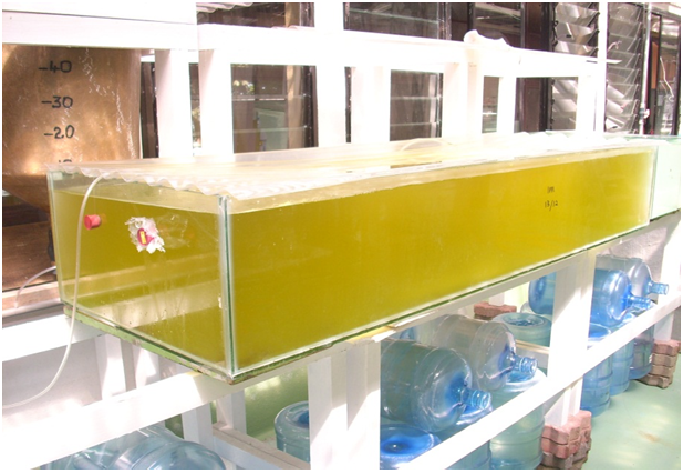 |
Isochrysis
cultured in 300 liters aquarium at semi-open hatchery
 |
Therefore, I decided to culture my microalgae in a closed room equipped with an artificial light, hoping to resolve the aforementioned problems. The results obtained will be compared to the semi-open hatchery culture site as to determine the proper site to produce a better nutritious microalgae. First of all, I needed to get the equipment to set up the lighting system.
Equipment
|
Quantity
|
Price/unit (RM)
|
Actual price (RM)
|
- 2 x 40W F/L Fitting
|
8
|
19.00
|
152.00
|
-
Fluorescent tube
|
16
|
5.00
|
80.00
|
-
Starter S-10
|
2
|
13.00
|
26.00
|
-
Light dimmer
|
2
|
0.50
|
1.00
|
- 2 x
40 Metal
reflector |
8
|
9.50
|
78.00
|
-
Flexible wire
|
12m
|
2.60
|
31.00
|
TOTAL: |
RM 366.00 |
 |
 |
| Starter S-10, light dimmer and flexible wire |
 |
| 2 x 40 Metal reflectors |
Once the equipments were mounted together, here is the lighting system...
 |
| Four fluorescent tubes for each rows (5000 - 6000 Lux) |
 |
| Light dimmer installed to control the light intensity |
I will update again once the new culture site is fully completed and ready for microalgae culture. See you guys soon!
Prepared by : Mohammad Basri Eshak
Credits to : Shahidan (CEMACS staff)
Subscribe to:
Posts (Atom)